This is a read-only archive of the old Madabout Kitcars forum. New posts and replies are no longer possible, but every thread is still here to browse and read.
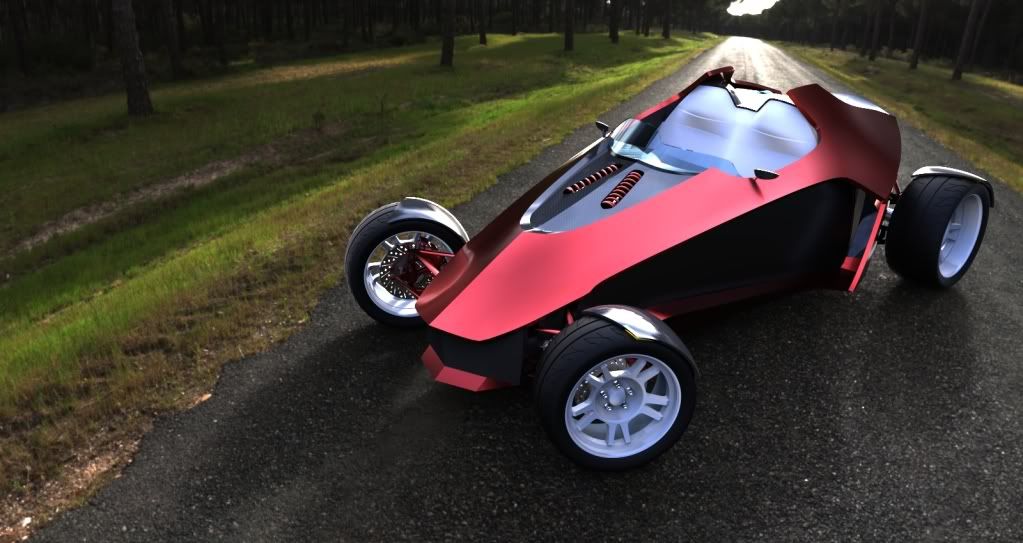
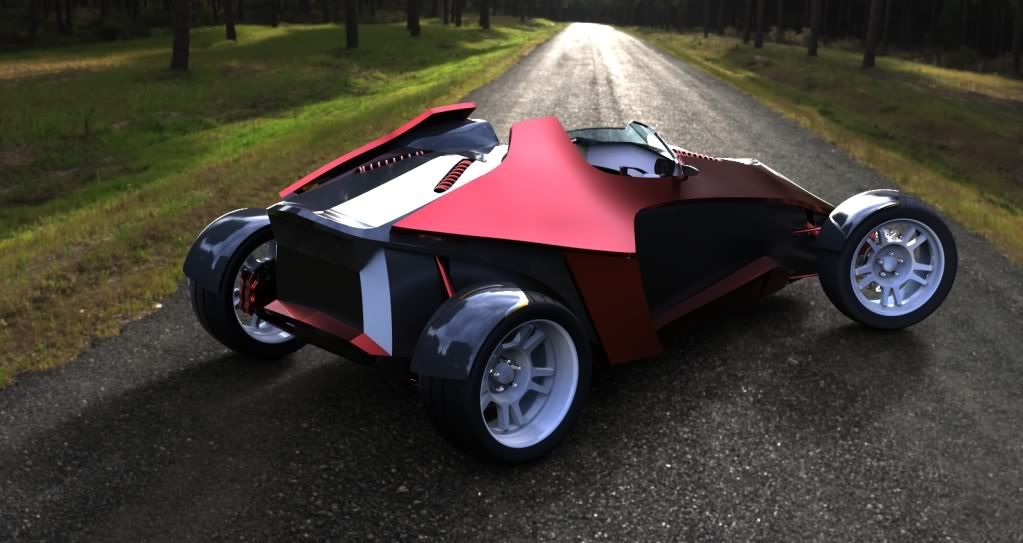
My name is Aaron McTurk and I am a final years design student at Massey University in Auckland, New Zealand. I’m currently working on my honours project, which is based on the idea of a light, fun car, much like a kit car! The project so far is proving very exciting and I’m hoping that I can pick the brains of everyone here to get the best end result possible.
At the moment I’m conducting a survey on what makes a fun car 'fun', if anyone could give it a go, it’d be a huge help. It’s only 10 questions long and it should only take a few minutes to complete.
Hi all, thanks to everyone who gave the survey a go
Here's a further explanation of my project:
I'm designing a lightweight, small two seater car that's all about fun. As you guys well know, nothing beats driving a car that's light, low and nimble, and that's the experience I'm trying to achieve here.
I'm thinking of using a modular chassis, which would be delivered to the new owner for final construction, like a kit car with all of the components included! Any power source could be used, from electric, all the way through to a stonking great V8, all the owner would have to do is unbolt the motor module, unplug a few things, then roll a new one in.
Any suggestions, comments, etc are always welcome
Cheers, Aaron.
One thing I thougth about afterwards was that not everyone likes to buy everything from the kit manufacturer, e.g. you can go to westfield and buy the whole car in a box but others such as Shelsley, Marlin, Fisher etc will sell the chassis, suspension & bodywork in a box and a list of standard OEM parts from normal road cars for you to source.
If you are thinking of a modular design you need to consider the effect of different engine configurations such as weight distribution, o/a length, effect on wheelbase (as this will effect your suspension geometry) and a universal method of getting the power to the wheels (such as a propshaft down to a rear diff on a front engined rear drive car)
Hi Chris,
Good points on the modular design, That's going to be a big issue to tackle for sure. Hmmm, maybe limiting the choice in motors is a better idea...
You've also got me thinking about parts and donor cars now, so much to do!
Hi Aaron. You'll see my comments in your survey but I thought I'd repeat one or two here and perhaps expand on them to provoke conversation.
You'd need to consider how the car/company is perceived in terms of trust. In the past there have been too many here today, gone tomorrow cowboys promising everything and delivering little before disappearing leaving more than a few people with part-built cars and no way of getting the components they need. Banham to name but one.
Which brings me to my second point, quality of components. Some companies were known for the (lack of) quality of components (see above) and piss-poor after market support and I say this as the ex-owner of a Banham.
Donors. Think long and hard about which donors you choose. It's blindingly obvious and I'm sure you already know but selecting a donor of which there are many ageing (ie, cheap) examples around now is fine but in a few years they won't be. Plan with their obsolescence in mind, review the compatible components on a rolling basis to ensure continued availability. You need only to look at some of the projects for sale to see cars needing parts from vehicles built in the 1980's and in all likelihood those donors are either as rare as hen's teeth now or classics in their own right which kind of negates the concept of building a cheap car.
Those are some very good points, especially in terms of the donor cars, I'm guessing a good example would be using Sierra components when the car hasn't been manufactured for the last 20 odd years. (Sierras are very hard to find in New Zealand)
A donor car like a Suzuki Swift is something I'm looking at - they're hugely popular, the parts are cheap and the after market is relatively well supported.
The issue of trust is a very good one indeed, I wonder if that could be overcome by working with suppliers of parts and incorporating a support system from the very beginning...
Here's the rough specifications for the project at the moment:
- 2 seater, mid engine, rear drive
- Uses fwd donor engine, drivetrain and suspension for rear
- Cantilevered coilovers and double wishbones up front
- Composite or aluminium monocoque chassis with integrated roll bar
-Roughly the size of an MX-5/Miata, possibly smaller
Here's a few mock-ups to get an idea of the size and style of the car, they're quick and dirty, nothing fancy!
For reference, they're 1:10, wheelbase is 220mm and track is 140mm. They use the same rear engine section, based off rough Toyota 4-age dimensions
What I'm thinking of is using swappable body panels for the front cowling and roll bar area, hence the two different designs. The one with the card and skewer front end works well with this idea. the full monocoque chassis looks a lot better, but has less customisability.
Using a standard, spaceframe engine section means that new engines can be adapted very quickly, as long as they're similar in weight and size ( thinking transverse, 4cyl of around 1200-1500cc)
Any ways, what do you guys think? in terms of style, size, structure, anything!
Cheers, Aaron
Hi all, sorry for the lack of updates on this project, been incredibly busy as of late
At the moment it's looking like this:
This is a 1:5 scale clay model which will be scanned and CNC milled to create the final model. (it's only a half model, hence the mirror)
Current specs include:
2.35m wheelbase, 1.2m Track
Suzuki sport engine and gearbox (1600cc, approx 100hp)
Aluminium Foam Sandwich (think honeycomb) chassis, fibreglass body panels.
Cantilevered coil over suspension front and rear
What's left to do now is the interior design, a few tweaks for the exterior and then building the final model!
I'd love to hear any thoughts or opinions on the design so far!
wow, really nice design!
Given all of the work that you've had to put into just the model, is it not possible to just make a full size buck in polystyrene and body filler the way that Gary at Sammio designs? or are you limited by money/space/regulations?