This is a read-only archive of the old Madabout Kitcars forum. New posts and replies are no longer possible, but every thread is still here to browse and read.
Last year, having completed my Marlin Sportster a few years previously, I started to get itchy fingers again. This time I have chosen to build a Pembleton which is a very vintage looking 3 wheeler using Citreon 2CV mechanics.
I chose the Pembleton because:
a. I like its looks
b. Being a 3 wheeler it is classed as a heavy trike and only has to pass the MSVA test which is both less onerous and cheaper than the IVA.
c. Should be (relatively) cheap to build and run.
It's generally considered to be one of the best examples. Most Pembleton owners name their cars - this one is called Silverfish.
It's a standard to aim for. Not sure if my skills are quite up to it however - we shall see! There are more pictures of this and other completed cars on the Pembleton website http://www.pembleton.co.uk/Home.html
It's generally considered to be one of the best examples. Most Pembleton owners name their cars - this one is called Silverfish.
It's a standard to aim for. Not sure if my skills are quite up to it however - we shall see! There are more pictures of this and other completed cars on the Pembleton website http://www.pembleton.co.uk/Home.html
Robin
Robin
How do the open engines get through MSVA is it much less stringent than IVA?
Mike
How do the open engines get through MSVA is it much less stringent than IVA?
Mike
There seems to be two schools of thought.
Apparently there is an exemption for the cooling fins of air cooled engines so with some carefull positioning/covering of all the ancilliaries so they are not contactable you can get away with this.
But recently most builders seem to have fabricated a simple mesh guard that covers the whole kit and caboudle. Bit of a sledgehammer approach. Rust seems to attack them fairly quickly after the test and they tend to fall off....
I wonder what they do for the new Morgan 3 wheeler?
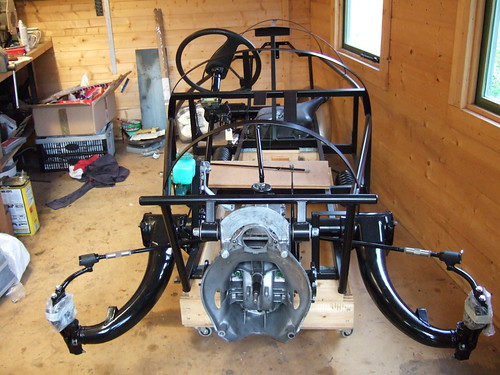
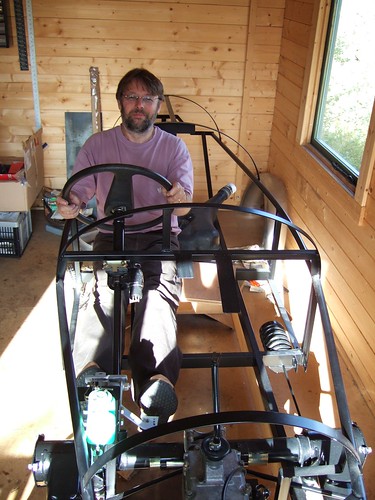
My new workshop (shed) is only just long enough to take the built car and so it's difficult to get a picture of the whole thing in one go! I have made a dolly from some large bits of timber (left over from the shed build) and some industrial castors, so that I can easily move the chassis to make best use of the limited space.
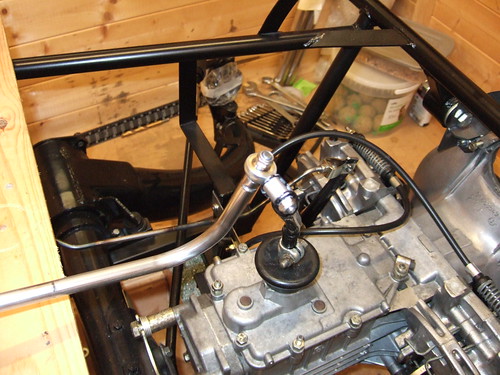
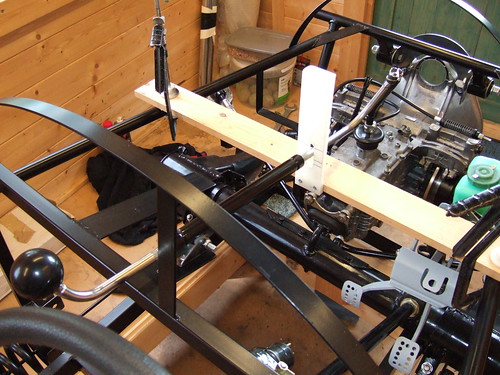
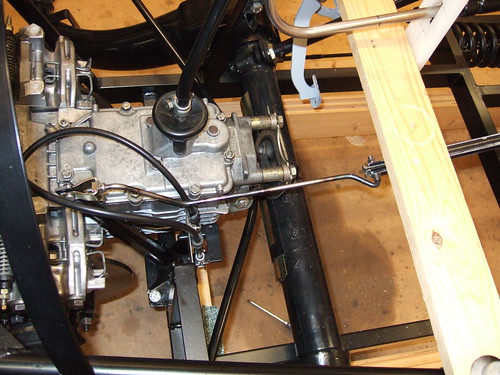
Gearslide (gearstick?) arrangement. I replaced the 'orrible standard rubber connection between the lever in the box and the gearslide with a rose joint. DSCF1679 by Robin J Martin, on Flickr
Front of gearslide will evenetually be supported by bulkhead but for now it's a block of wood! Interestingly the 2CV gearbox is a dogleg. First opposite reverse, 2nd opposite 3rd and 4th opposite nothing! DSCF1672 by Robin J Martin, on Flickr
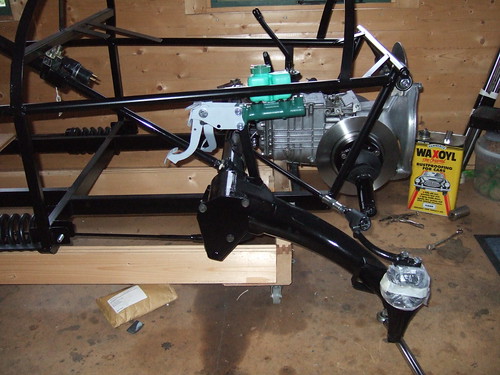
Umbrella style handbrake. I had to make the link as the standard 2CV link is too short. DSCF1680 by Robin J Martin, on Flickr
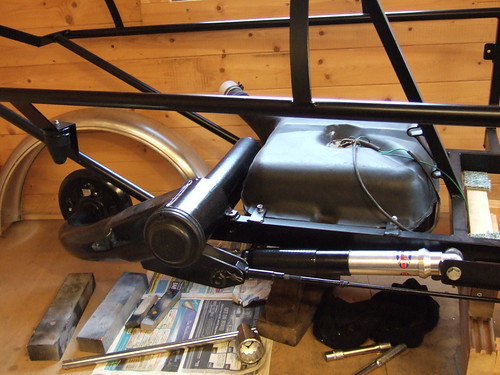
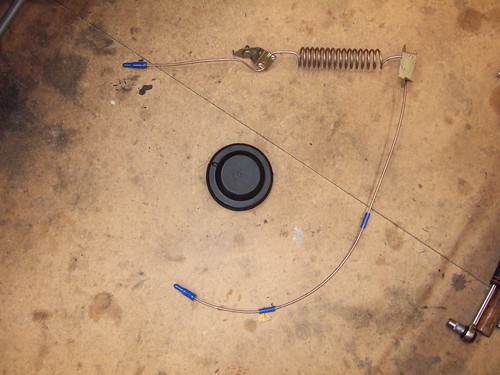
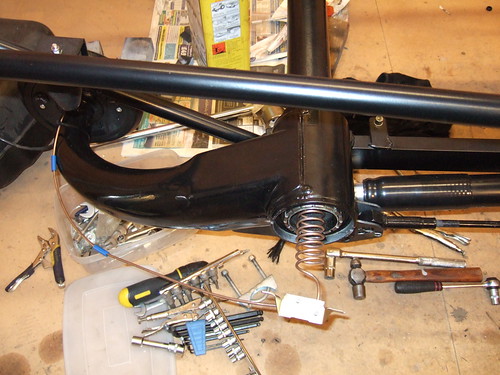
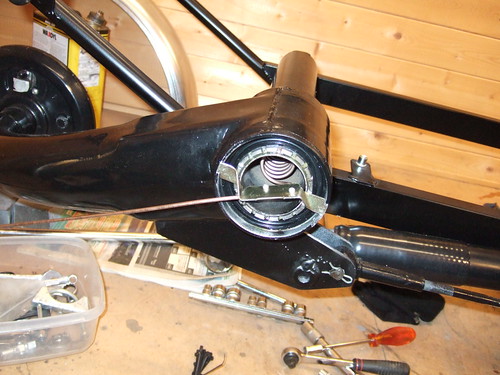
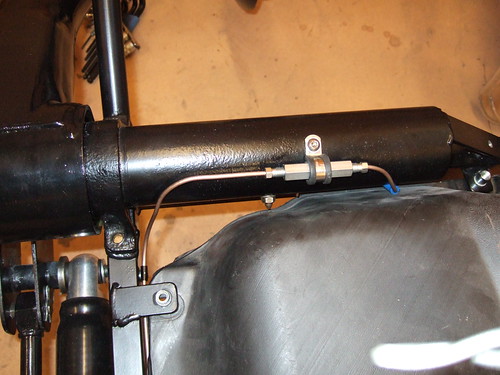
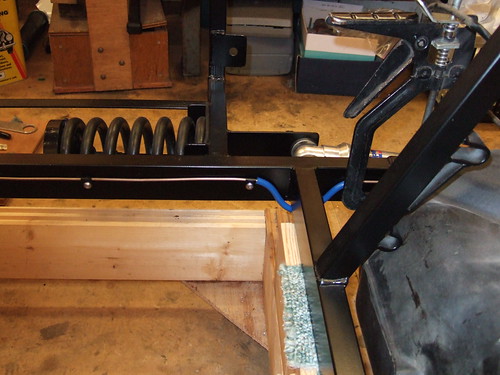
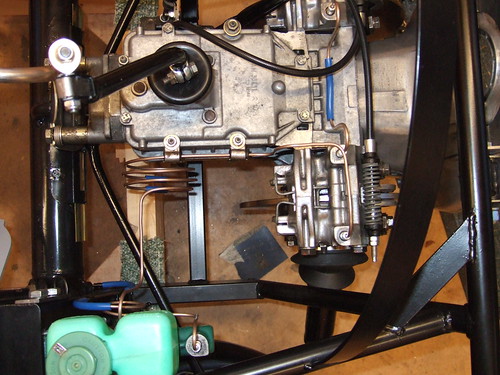
Various pictures of the brake line instalation. There isn't a single flexi in the whole system thanks to Citreon's ingenuity. DSCF1678 by Robin J Martin, on Flickr
I love those 'coil sprung' brake lines, they are such an elegant design.
Less connections and nothing to perish. (But no ethanol for you!!)
Did you re-make the new ones yourself?
Unfortunately not. Citreon use a different method of terminating the brake pipes (now there's a surprise). They have a bulge about 1cm from the end of the pipe (instead of a flare on the end) and a little rubber tube that slips over the end of the pipe that actually makes the seal. You can buy a special Citreon brake flaring kit but is is £££££. Forunately a company called Bonapart (really!) make a brake pipe kit specially for the Pembleton with the correct length pipes. Well - almost correct, I had to be a bit inventive in one case.
They have a bulge about 1cm from the end of the pipe (instead of a flare on the end) and a little rubber tube that slips over the end of the pipe that actually makes the seal. ...
Robin
Trust the French to spoil what could have been a perfect design! I bet that little rubber tube will melt away in some ethanol!!
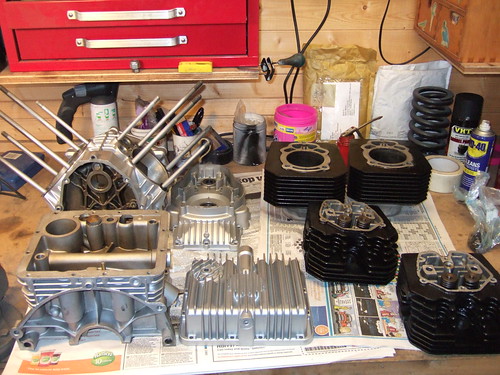
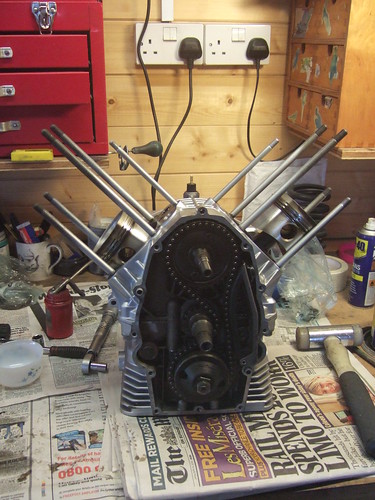
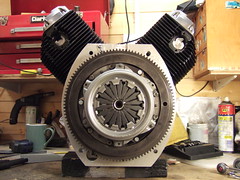
Almost completed the strip and re-build of the Guzzi engine. After several experiments with paint I used VHT caliper paint for the main block castings and VHT barrel paint for the barrels and heads.
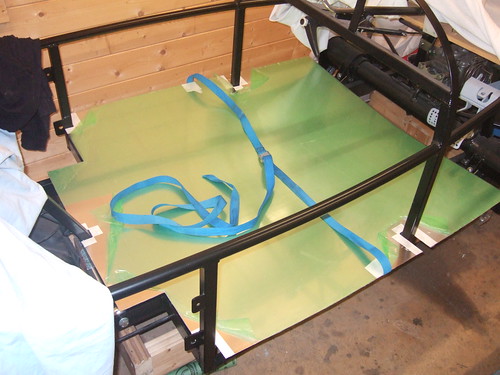
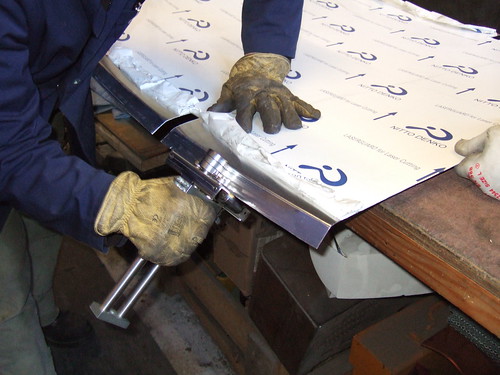
Last weekend I went to a workshop weekend hosted by Duncan Grimmond. Duncan is a professional sheet metal artisan (http://www.zinccounters.co.uk/) and also a fellow Pembleton enthusiast. Once or twice a year he is kind enough to open up his workshop so that Pembleton builders can access his huge range of metal forming tools - folders, shrinkers, stretchers..... The main job I wanted to do was to form the flange on the floor which is curved and so potentially tricky. Duncan made it look easy....
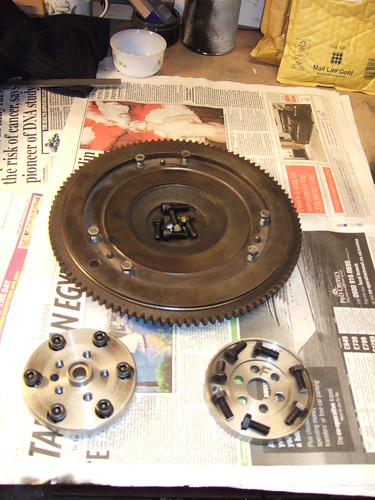
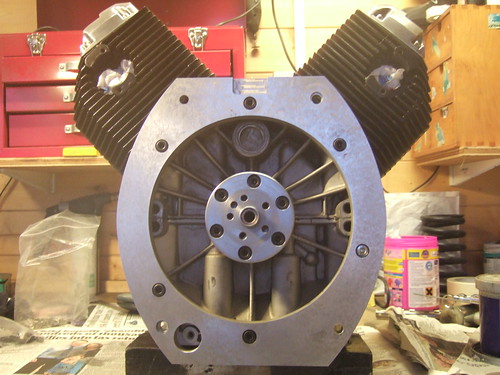
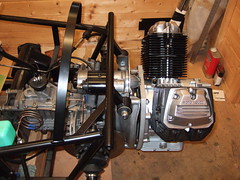
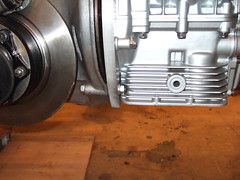
Engine fitted at last. Everything went according to plan (well more or less). So I know have an Italian engine mated to a French gearbox using a British adapter. Cool.
A few pictures...
Completed engine from the front. The original ignition was fired from a pickup on the Guzzi flywheel. But of course I am now using the 2CV flywheel. Proiblem solved by using an old school analog electronic igntion from Lucas. The pickup goes on the end of the camshaft. DSCF1727 by Robin J Martin, on Flickr
I have been working towards getting the engine running. Lots of little jobs to do first.
New bracket for clutch cable. The original one that was welded to the chassis meant the clutch cable was poorly aligned and right at the end of the adjustment. DSCF1741 by Robin J Martin, on Flickr
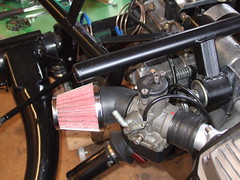
Carbs trial fitted with air filter from Ebay. Not the best of solutions but it will do to start. Neck for air filter clears chassis by at least 1mm! DSCF1738 by Robin J Martin, on Flickr
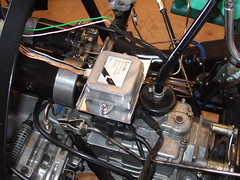
Old school electronic ignition (Lucas Rita) with coils underneath. The Guzzi employs a lost spark system which means two coils. DSCF1739 by Robin J Martin, on Flickr
I'll have to let you borrow my polishing mobs to keep the engine and body work (you are polishing all that loverly hand formed aluminium, aren't you?) spick and span.
I found a 2CV chassis already converted as a trike on Ebay a few weeks ago. I was really tempted with it as a basis for my current project but I am building a reverse trike load carrier and I doubt the 2CV brakes and suspension would be up to the weight I am expecting.
I should make one of those beading rollers at some point and fold some metal.