This is a read-only archive of the old Madabout Kitcars forum. New posts and replies are no longer possible, but every thread is still here to browse and read.
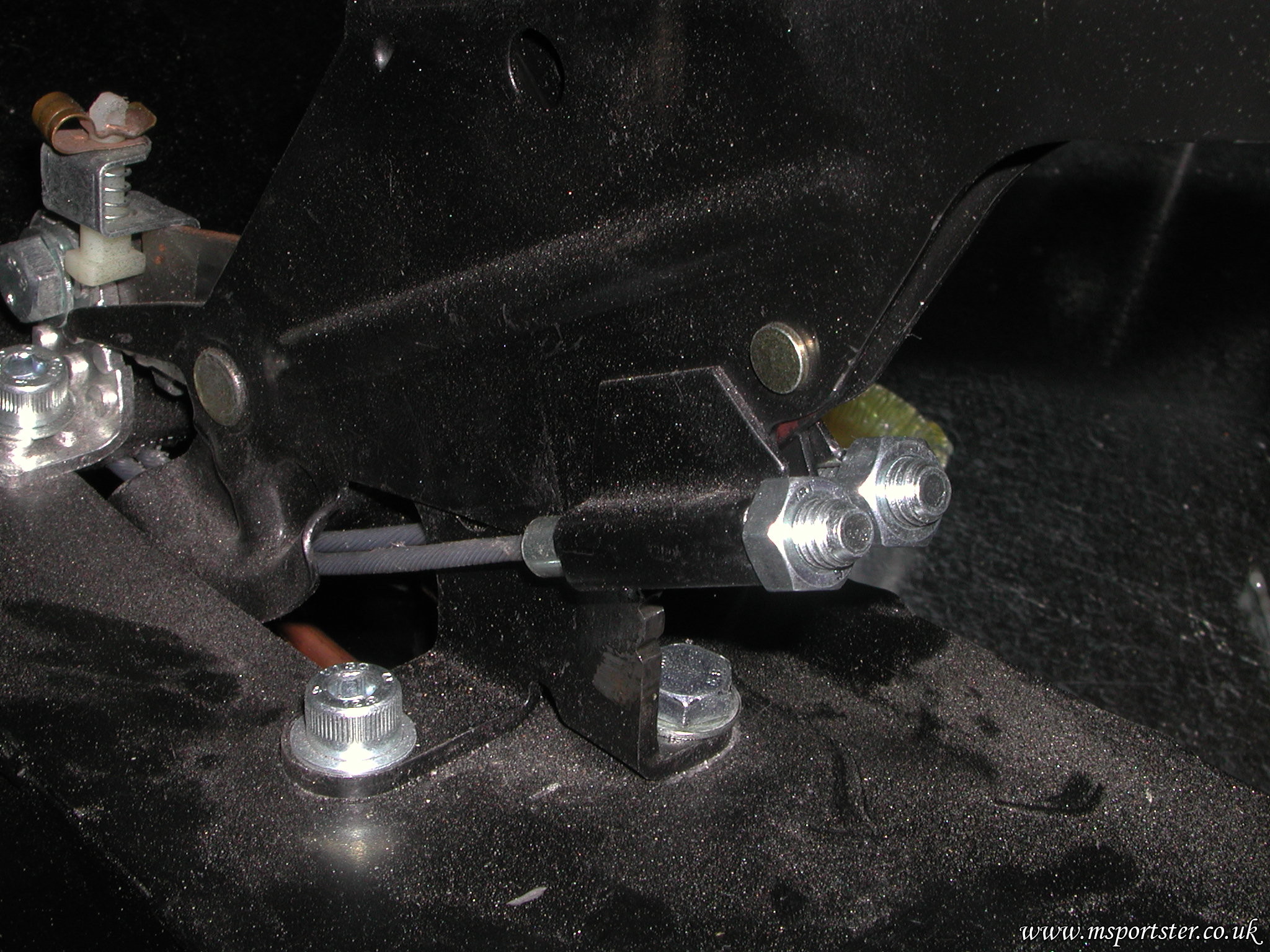
Here's a piccy of the switch in place on mine, as far as I remember the wire just connected up to the copper bit. With the handbreak down it breaks the circuit contact (as its grounded through the handbrake)
The handbrake warning switch along with fluid level indicator is a requirement. You have to have a level sensor and warning light & you have to be able to test the light from the drivers seat so the switch on the brake lever is the easiest way for this.
The handbrake warning switch along with fluid level indicator is a requirement. You have to have a level sensor and warning light & you have to be able to test the light from the drivers seat so the switch on the brake lever is the easiest way for this.
I have a copy of the SVA inspection manual and I can't see the requirement for the handbrake switch, but I do see that you need a means of test the fluid level light if fitted. So I agree, the handbrake light is a great way of testing the light.
The thing that is worrying me is in section 16.4d which states;
'Check that the hydraulic system is fitted with a red warning lamp visable from the driving position and capable of signalling the failure of any part of the hydraulic system as soon as the brake is applied and the lamp is lit as long as the failure exists (when the ignigion is on)'.
The only cars that I know had this was Volvos, or does this mean that if fitted the rule applys.
Thats right. Although it does say as long as the level can be checked without removing the cap. So I suppose that a clear reservoir is good.
It's a great pity that this inspection book isn't on-line, but I guess that nobody makes money that way.